

When you think of a buffalo, you probably think of a four-legged beast that roams the plains. You may conjure an image of the horns, the fur, and the distinctive hump that’s just behind its head. It’s made of muscles and bone that help it move through the snowy winter.
Depending on where you live, a built-in snowplow may sound like a dream. But for those who have a buffalo neck hump, it may be anything but. A buffalo hump may make them self-conscious about how they look and for others it may cause pain and discomfort.
If you have a buffalo hump, you may be wondering what chiropractic care can do for it. This guide tells you everything you need to know.
What Is a Buffalo Hump?
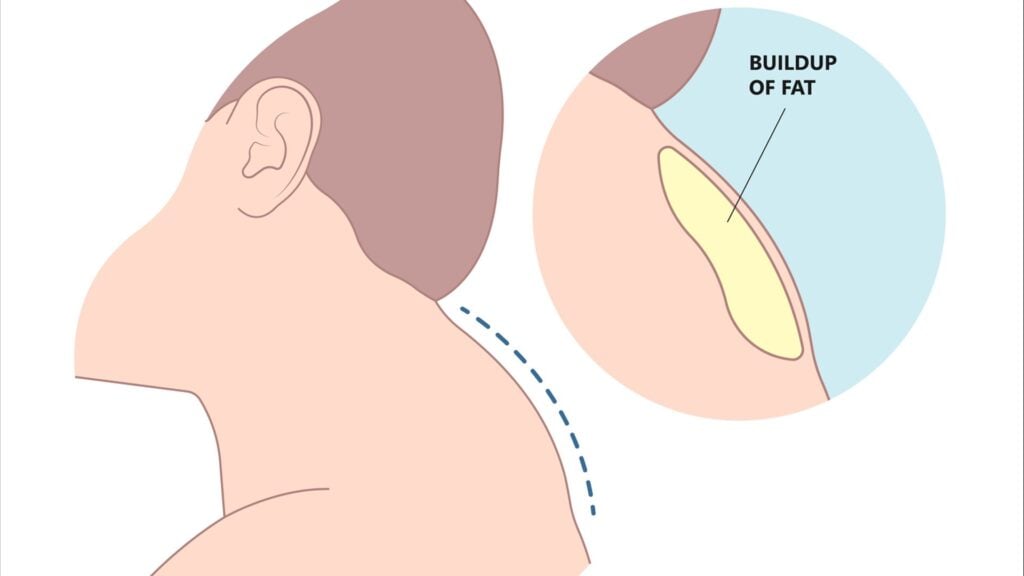
A buffalo hump, sometimes called a neck hump, is an abnormal fat pad that develops at the base of your neck, right between your shoulder blades. The medical term for this is dorsocervical fat pad hypertrophy. Buffalo humps can be small and barely noticeable, but they can also be large and prominent, impacting your posture.
To be clear, a buffalo hump is not a change in your spinal column and, in many cases, is a cosmetic concern. However, in some cases, a buffalo hump may cause you to lean forward, resulting in physical discomfort like:
- A stiff neck
- Limited range of motion and reduced flexibility
- Headaches
- Difficulty sleeping
Buffalo Hump vs. Dowager Hump
Sometimes what you think is a buffalo hump is actually a dowager hump. While both create a bulge at the base of your neck, they are not the same thing. A buffalo hump is an accumulation of fat, but a dowager hump is a physical change to your spine. It’s a subtype of kyphosis, the excessive rounding of your spine.
While kyphosis can impact anyone, a dowager’s hump is more common in older adults, as it’s often caused by age and age-related conditions like osteoporosis. In most cases, your spine rounds forward because the vertebrae (bones) in your neck are weak, forcing your spine into a more forward and rounded position.
Buffalo humps and dowager humps look similar, and only a doctor can diagnose your condition. But there are some simple ways to see if you have a buffalo hump or a dowager hump.
You likely have a buffalo hump if it:
- Feels soft and fatty
- Doesn’t change despite improving your posture or exercising to strengthen your back
- Appeared around the same time you went through metabolic or hormonal changes or you started certain medications
It’s more likely you have a dowager’s hump if it:
- Feels firm
- Is more obvious when you’re slouching but goes away when you correct your posture
- You have back or neck stiffness that doesn’t seem to go away
What Causes a Buffalo Hump?
A buffalo hump can be caused by certain medications and conditions but also influenced by your genetics. These are some of the more common causes of a buffalo hump.
Cushing Syndrome
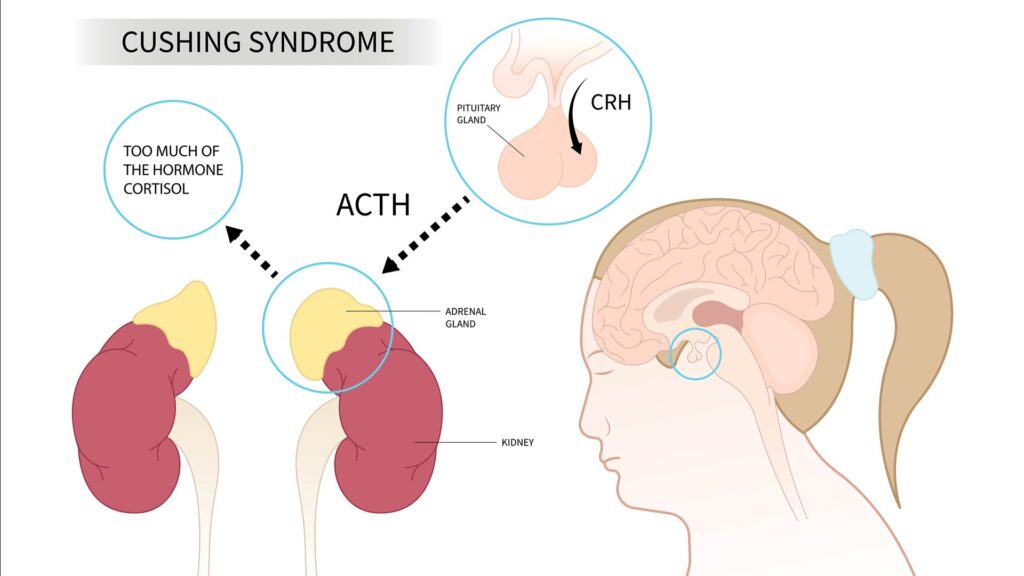
Many cases of buffalo hump are caused by Cushing syndrome, which is when you have too much cortisol in your body for too long. Cortisol is the “stress hormone,” something your body releases to help you respond to stress, and one of those responses is that it slows your metabolism and promotes fat storage. People with Cushing’s may store fat in their face or belly, but it’s also common for them to store it in their back, resulting in a buffalo hump.
Obesity
Another common cause of buffalo hump is obesity. When you’re overweight, your body may not evenly distribute where you store the excess fat, causing a buffalo hump. However, some people are genetically prone to storing excess weight in their back and neck.
Hormones
Beyond cortisol, other hormones influence how and where we store fat in our bodies, and hormonal imbalances can contribute to the formation of a buffalo hump. For example, declining testosterone levels, estrogen dominance, or a thyroid imbalance may encourage your body to store excess fat in your neck.
Lipodystrophy
Lipodystrophy is the umbrella term for a group of conditions in which you lose fat tissue (adipose tissue) in some parts of your body or when your body abnormally distributes fat tissue. Some types of lipodystrophy are genetic, while others are caused by medical conditions or medications. Corticosteroids, like prednisone, dexamethasone, and hydrocortisone, can cause an increase in cortisol levels, leading to a buffalo hump.
Can Chiropractic Fix a Buffalo Neck Hump?
Because a buffalo hump is made of fat, chiropractic care and adjustments can’t fix a buffalo hump. Ultimately, treating a buffalo hump depends on the cause. For some people, losing weight is enough to get rid of the buffalo hump, but for others, liposuction or surgical removal may be the better treatment option.
Chiropractic can help you address and relieve the underlying pain and discomfort a buffalo hump may cause, like neck stiffness or upper back pain. Your practitioner may use spinal manipulation, soft tissue therapy, or other chiropractic techniques to help relieve any muscle tension you may be carrying in your neck, shoulders, or back due to your buffalo hump.
Chiropractic Care Provides Support and Relief
For people with a mild buffalo hump, chiropractic can provide the support and relief they need to function in their everyday life. It can reduce the pain and stiffness that often happens in the neck, shoulders, and upper back. While more serious cases may need surgical intervention, chiropractic can help you restore the flexibility and range of motion you need during your recovery.
The caring, compassionate team of chiropractors and massage therapists at Flourish Chiropractic Spa is here to provide the support and relief you’ve been searching for. Whether it’s a buffalo hump, dowager’s hump, or something else, our team is here to help you take the first steps on your healing journey.
